
FREE EBOOK — NO EMAIL WALL
0 TO 6FIG
The exact playbook for taking a streetwear brand from zero to six figures. Read it free, right here. It also gets added to your order automatically when you buy any theme.
GET THE THEME THAT RUNS THIS PLAYBOOK0 TO
6FIG
What I learned working with 6 and 7 figure brands. And building my own.
Who's writing this
I'm Seth, founder of SitesBySeth. Scaled my own brand to $20k/month on my first drop. Since then I've taken client brands from $2k to $10k+ a month and built the sites and backend systems for famous artists and 6-7 figure brands. I've seen what actually works from inside, with real money on the line.
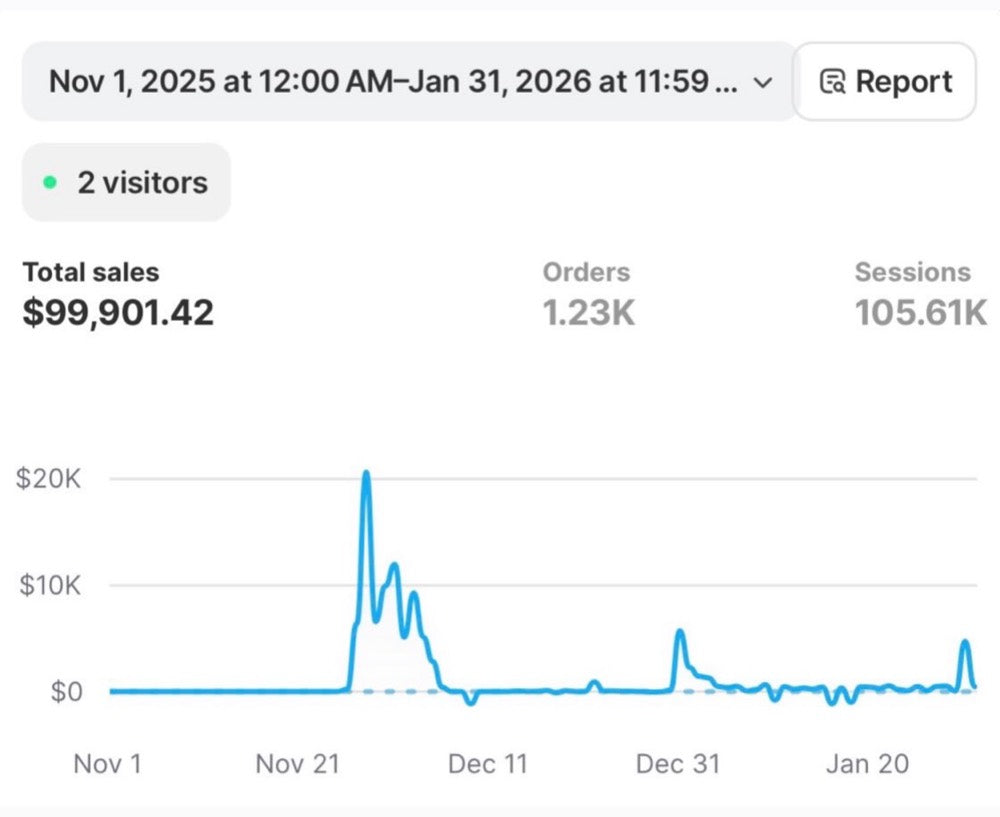
This book is everything that actually moved the needle, compressed. No recycled guru theory. If it's in here, it made someone money. Read it in order the first time, then keep it open at whatever stage you're really at. Not the stage your ego thinks you're at.
Intro
The Ladder
Every brand that dies, dies the same way: the owner is doing stage 3 things at stage 1. Running ads to a site that doesn't convert. Preordering product nobody proved they want. Posting the same reel 40 times and calling it marketing.
Growth is a ladder and every rung has different rules:
- Stage 1, Foundation ($0 to first sales): identity, product, site, first drop.
- Stage 2, Growth (to $10k/month): content at volume, micro influencers, bigger carts, first systems.
- Stage 3, Scale (to 6 figures): belief moving, paid ads, backend revenue, systems that run without you.
The kid spending $50/day on Meta with a default theme and 200 followers isn't scaling. He's donating to Zuckerberg. The brand doing $8k/month with no email flows isn't about to blow up. It's leaking a third of its revenue daily. Skipping rungs is how you stay broke while looking busy.
The difference between you and the 7 figure operators is not talent. It's sequence. This book gives you the sequence.
The Foundation
$0 to first sales. Identity, product, site, first drop. In that order.
Chapter 1
Brand Before Product
Real talk: nobody needs another hoodie. Your blank exists on a thousand other sites, cheaper. What doesn't exist is the world you wrap around it. That world is the actual product.
Pick a worldview, not a niche
"Streetwear" is a category, not a brand. A brand is a point of view: who wears this, what do they believe, what does it say about them when they put it on? Every 6-7 figure brand I've been inside can answer that in one sentence. If you can't, you don't have a brand yet. You have inventory.
Quick way to find it: write the 3 feelings you want someone to have wearing your stuff (untouchable, nostalgic, chosen, whatever's true for you). Then every decision gets tested against those 3 words. Name, fonts, colors, photography, caption voice, even your refund emails. Consistency is what makes a small brand feel big.
Before you design anything
- Name + handle you can own. Check IG, TikTok and the domain in one sitting.
- Visual world: 2 fonts max, 2-3 colors max, one photo style. Build a 20 image moodboard that feels like the brand. None of them need to be clothes.
- Voice: lowercase and cold? loud and hyped? Pick one, never break character.
- The face: decide early if there's a personal brand attached. The brands that scale smoothest almost always have one.
The fastest growing brand I've worked with didn't win on product photos. The owner's personal brand did the heavy lifting. People bought the clothes to buy into him. A good product gets you a customer. A good personal brand gets you a fanbase that buys every drop without thinking. If you're willing to be the face, you're playing with an unfair advantage.
Hype is manufactured, not hoped for
Big brands don't launch. They build pressure. From day one, document everything: sketches, sample unboxings, rejected designs, the story of why you're building this. You're not selling yet. You're making sure that by drop day, people feel like they watched this thing get born. People buy what they watched grow.
Chapter 2
The Product Playbook
Rule #1: premade over preorder. Period.
Half the new brands I meet fight me on this. Prioritize premade inventory. Preorder feels safe (collect money, then produce) but here's what actually happens when a no-name brand runs preorders: a stranger pays today and waits 4-8 weeks. Every day of that wait, doubt compounds. Chargebacks come. DMs turn hostile. And you never get the wave of "it arrived" posts that premade brands get, because everyone's waiting instead of posting.
Preorder is a privilege you earn with proven demand. It only makes sense when a reel or post already went genuinely viral (six figures of views, comments asking "where do I buy"), or when an audience that already bought from you trusts your timelines. No proven demand = premade, small run.
A tight 30-80 unit run you ship in 2 days beats 500 preorder units and a month of "where's my order" DMs. Sell out fast. A sellout is a marketing asset. "Restocking soon" is the most profitable sentence in streetwear.
Sampling: the step you don't skip
- Order samples from 2-3 manufacturers. Same design. Compare fabric weight, stitching, print quality, and how it survives a wash.
- Wear it a week, wash it 3 times. If the print cracks now, that's a refund wave you just dodged.
- Film everything. Sample unboxings are elite pre-drop content. Hype and quality control in one motion.
- Measure every sample and publish a real size chart. Sizing confusion silently kills conversion and it's the #1 cause of returns in apparel.
Hoodie costs $22 landed, sells for $70. A 50 unit premade run ties up $1,100. If you can't risk $1,100, you're not ready to run preorder logistics for strangers either. Do a 25 unit run or keep saving. Underfunded preorder brands don't bootstrap. They implode publicly.
Drop, don't stock
Early on, run limited drops on set dates instead of an always-open catalog. Scarcity concentrates your marketing into moments, trains your audience to move fast, and lets you learn demand with small bets.
Chapter 3
Your Site Is Your Best Closer
Here's the truth about traffic: you pay for every visitor. With money or with hours. When your site converts at 1% instead of 3%, you're paying triple for every customer, forever. Your site is the multiplier on everything else in this book.
I've read hundreds of posts from founders saying the same thing: "1,000 visitors a day, not a single sale." "Spent my last $700 on ads, 0 sales." They blame the algorithm, the course, the pixel. It's almost never that. Traffic that doesn't convert means the store is leaking trust.
What a store that converts actually has
- Instant identity. In 2 seconds the homepage communicates the worldview from Chapter 1. Clean transparent logo, one strong hero, zero placeholders. If it looks like a default theme, the visitor decides you're not a real brand. And they're right to.
- Speed. Your buyer is on a phone with mid signal coming off an IG story. Every second of load time bleeds sales.
- Frictionless product pages. Flat-lay first, then on-model. Real size guide. Shipping and returns answered on the page. Every unanswered question is an exit.
- Trust stacked along the path to checkout. Reviews, UGC, customer photos scrolling right where doubt happens. Not buried on some page nobody visits.
- Psychology built in, used honestly: live scarcity on limited runs, drop countdowns, cart progress bars ("$14 away from free shipping"), cart upsells. This is how the biggest stores on Shopify communicate demand. It only reads scammy when the scarcity is fake. Yours is real.
- A password page that works while you're closed. Countdown + email/phone capture. Pressure building before the store even opens.
What this looks like in the data
Same store, days apart, while the structure got fixed:
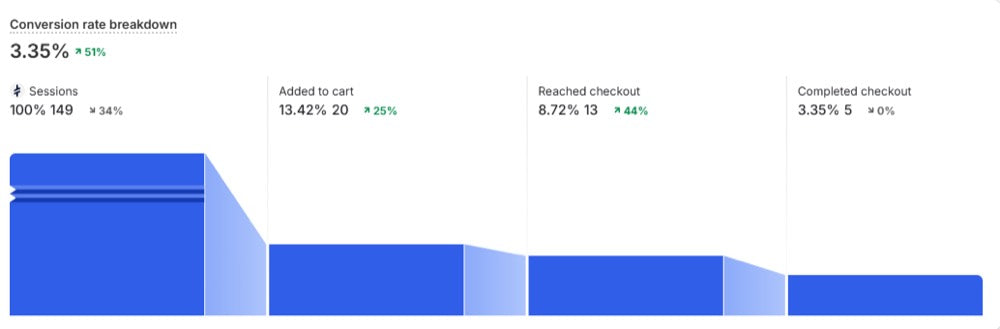
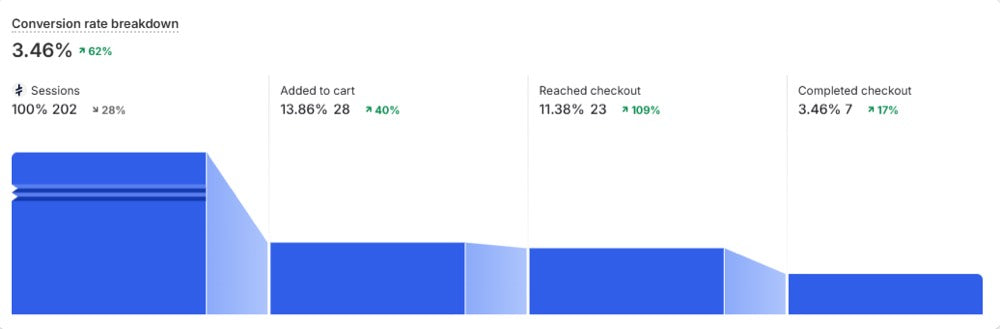
Everything above is my lane. I build custom Shopify stores for brands with the exact system I set up for 6-7 figure brands and famous artists: trust rotators, drop countdowns, urgency badges, cart upsells with progress bars, AI size guides, auto-scrolling UGC walls, drop-psychology password pages. No stack of $30/month apps. It's all built in.
And if you've been burned before (the Fiverr dev with the pirated theme, the agency that ghosted with no preview link) here's how mine works: flat $200, delivered in about 3 days, and it's not done until YOU say it looks right. You have final say. Always.
Want to install it yourself? Reign is the same conversion system as a theme. $150 once, ongoing updates, no app subscriptions.
Either way: do not run another ad or drop until your store is at this standard. Traffic to a weak site is money on fire.
The 10 point pre-launch check
- Homepage loads under 3s on mobile data
- Zero placeholder text or stock images
- Logo transparent, right size, header clean
- Product page: flat-lay first, size guide, shipping answered
- Reviews/UGC visible on the product page
- Cart upsell on. Test checkout with a real card
- Free shipping threshold set just above your AOV
- Email/SMS capture live (popup + password page)
- Announcement bar says something real, not "Welcome to our store"
- Open your site on your phone like a stranger. Would you trust it with $70?
Chapter 4
The Drop System
A drop isn't a day. It's a 3 week pressure campaign with a 24 hour release valve.
Weeks 3-2 out: seed the story
- Tease the concept, not the product. Moodboard clips, fabric close-ups, "something's coming" energy.
- Announce the exact date and time early. A date turns followers into people waiting.
- Password page up: countdown + "first access goes to the list." Everyone who signs up is pre-sold.
Week 1: show the product
- Full reveal: on-model, fit videos, detail close-ups. Multiple angles per piece (that matters, see Chapter 5).
- Say the numbers out loud: "only 60 made." Real scarcity, stated plainly.
- Seed product to micro influencers NOW so their posts land drop week.
- Daily story countdowns. Polls ("which colorway you taking?") are engagement AND demand data for the next run.
Drop day
- List gets access 1-2 hours early. Reward the list every time and the list grows itself.
- Post as sales come in. "12 left" is honest urgency and it works.
- When something sells out, say it LOUD. Screenshot it. A sellout post does more for your next drop than any ad.
The 48 hours after
- Ship fast, film the packing. Speed of first delivery = review quality = repeat rate.
- Ask every customer for a story tag. Repost all of it. That's your next drop's trust wall.
- Log what sold first, sizes, colorways, which content spiked. Your next run designs itself.
Foundation is done when: identity is consistent everywhere, you've quality-checked premade product, your site passes the 10 point check, and you've run one full drop cycle. However small the numbers, the machine exists. Now we feed it.
Growth
First sales to $10k/month. Volume content, borrowed trust, bigger carts, first systems.
Chapter 5
Organic Content That Compounds
Organic is your engine to $10k/month. Free, compounding, and it builds the trust that makes ads cheaper later. But almost everyone runs it wrong the same way: they find one reel that got views and repost variations of it until the account flatlines.
Posting the same reel doesn't just bore people. It starves the algorithm. Short-form platforms push each post to new audience segments based on how it performs. Identical content keeps hitting the same segment until it's exhausted. Different angles reach different people.
The angle system: one product, 8 doors in
| Angle | What it looks like |
|---|---|
| Fit check / styling | 3 ways to wear it. Reaches the "how would I style this" buyer |
| POV / lifestyle | The piece inside a moment. Sells the world, not the garment |
| Detail shots | Stitching, embroidery, fabric weight up close. Sells quality |
| Behind the scenes | Sampling, packing orders, design process. Builds the bond |
| Founder story | Face to camera: why you built this, lessons, numbers |
| Social proof | Customer UGC, DM screenshots, sellout recaps |
| Reaction / street | Strangers reacting to the piece. Third party validation |
| Drop mechanics | Countdowns, "only 14 left," restock alerts. Pure urgency |
Volume + iteration beats perfection
- 1-3 posts a day across TikTok and IG. At small size, volume is how you buy lottery tickets on the algorithm.
- Hook in the first second, visual or spoken. "I quit my job to make hoodies" beats a logo animation every time.
- When a video pops, don't repost it. Remake it. New hook, new setting, different angle from the table. Same winning product, new door in.
- Track views, saves, and above all site clicks per post. Views feed ego. Clicks feed revenue.
The brands that win organic aren't more creative. They're more systematic. 8 angles, posted daily, iterated weekly, tracked in a sheet. That's the whole game.
Chapter 6
Influencers on Any Budget
Influencer marketing is borrowing trust you haven't earned yet. And the data sides with the little guys: micro influencers average around 3.9% engagement vs 1.2% for mega accounts, benchmark studies put influencer ROI around $5.70 back per $1, and micro campaigns convert and drive repeat buyers at higher rates than big names. Small and specific beats big and famous, especially on your budget.
Low budget playbook: gifting at scale
- List 50-100 micro and nano creators (2k-50k followers) already posting your aesthetic. Your customer already follows them.
- Vet engagement, not followers. Real comments from real profiles beat 80k followers with 90 likes.
- DM short and human: "yo, love your fits. dropping [brand] this month, want to send you a piece, no strings." Expect 10-20% yes.
- Send it with zero demands but make the unboxing so good they want to post. Handwritten note, clean packaging, their name on it.
- Repost everything. One gifted post = content + social proof + reach in a single move.
With some budget
- Pay micro creators for content, not just posts. $50-200 gets UGC-style videos you'll run as ads later. The post is reach. The file is an asset.
- Structure on performance: flat fee + discount code, or affiliate cut. Codes double as tracking.
- Batch around drops. 10 creator posts in the same 72 hours hits way harder than 10 spread over a quiet month.
Artists and big personal brands are the extreme version of this chapter. When someone with real cultural weight wears the piece, demand goes vertical overnight. I've watched it from inside those brands, and the site better be ready when it hits. You can't buy that at stage 2. But 30 micro creators posting the same week creates a smaller version of the same effect: your customer sees the brand 3 times in 5 days and starts believing it's everywhere. Ubiquity is manufactured.
Chapter 7
Offers, Upsells & the AOV Game
Math nobody teaches: getting the customer to your site is the expensive part. Once they're buying, every extra dollar on that order is almost pure profit. No extra ad spend, no extra content. AOV is the quietest lever in ecommerce and the first one I pull on every brand I work with.
The AOV stack
- Free shipping threshold just above AOV. Average order $62? Free shipping at $75. The cart progress bar does the selling for you.
- Bundles. Hoodie + matching sweats, slight discount. Raises AOV and moves more units per decision.
- Cart upsell. One easy-yes add-on at checkout (beanie, socks, tee). 10-20% take rates are normal when it actually matches.
- Post-purchase upsell. The one-click offer AFTER payment is the highest converting real estate in your store. Decision's already made, friction's already gone.
- "2nd piece 20% off" beats a store-wide sale. Rewards the behavior you want without cheapening the brand.
Offers are not discounts
A discount is a price cut. An offer is a reason to act now. "20% off everything" trains people to wait for sales. "Free matching beanie with every hoodie, 48 hours only" gets the same urgency without touching your price integrity. Big brands protect their price like it's part of the identity. Because it is.
200 orders/month at $62 = $12,400. Add a $9 cart upsell 15% take, push free shipping to $75, add one bundle. Realistic outcome: $70+ AOV. Same traffic, same content, same spend: +$1,600/month, forever. From one afternoon of setup.
Chapter 8
Systems From Day One
The difference between a brand and a hobby is that a brand runs on systems, not vibes. You don't need staff yet. You need 3 trackers and a calendar. Every 6-7 figure brand I've been inside runs versions of these, and bolting them on later is 10x harder.
1. Content system
One calendar (Notion, Sheets, whatever you'll actually open): post date, platform, angle, hook, link clicks, outcome. Plan a week ahead, batch-film in one session, review numbers every Sunday. 15 minutes of review a week is the difference between iterating and guessing.
2. Support system
- One inbox where every question lands. Not four apps.
- Saved replies for the big 5: sizing, shipping time, tracking, returns, restocks. That's 80% of everything.
- Answer speed is a sales tool. "Does this run big?" answered in 5 minutes is a sale. Answered tomorrow it's nothing. Fast support also kills chargebacks before they're born.
3. Profit tracker
Most owners know revenue and nothing else. Revenue is for captions. Profit is the business. One sheet, weekly:
| Line | Example |
|---|---|
| Revenue | $8,200 |
| COGS | -$2,450 |
| Shipping + packaging | -$740 |
| Fees (Shopify, payments, apps) | -$390 |
| Marketing (ads, gifting, creators) | -$1,100 |
| Tools | -$120 |
| Real profit | $3,400 (41%) |
Know this weekly and every decision gets sharper: pricing, what to cut, how hard you can push ads. Fly blind and you can do "$15k months" broke. I've watched it happen.
Not sure which rung you're actually on, or why the numbers aren't moving? I do free audit calls. We go through your store, your content and your numbers, and I tell you exactly what's leaking. No pitch unless you ask.
Growth is working when: content ships daily on a calendar, creators post every drop, AOV is up 15%+ from launch, support answers in hours, and you know last week's real profit cold. Around here you cross $10k/month. And everything in Part III unlocks.
Scale
$10k/month to 6 figures. Belief moving, paid traffic, backend money, a machine that runs without you.
Chapter 9
Belief Moving: The Real Skill
Everything up to here was mechanics. This is the skill that actually separates 6-7 figure operators from everyone else, and most people selling courses can't even name it: belief moving.
A sale is never about the product. It's a chain of beliefs in the buyer's head, and your marketing either moves each link or the sale dies at that link:
- "This brand is real." (identity, site quality, proof)
- "People like me wear this." (UGC, creators, community)
- "The quality justifies the price." (detail content, comparisons, guarantees)
- "Wearing this makes me more of who I want to be." (the worldview from Chapter 1. This is the link that prints money)
- "I need to move now." (real scarcity, drops, deadlines)
Amateur marketing screams #5 all day ("LAST CHANCE!!") at people who never got past #1. That's why it feels desperate and doesn't convert. Advanced marketing diagnoses which link is broken and aims content at exactly that:
- Traffic but no add to carts? Link 1 or 3 is broken. Site trust or price justification.
- Add to carts but no purchases? Link 5, checkout friction, or shipping cost shock.
- Buyers but no repeats? Link 4 never landed. They bought a hoodie, not an identity.
The tools
- Pre-landers and advertorials. At scale you stop sending cold traffic straight to a product page. You send it to a story first. Founder's journey, "why 40,000 people joined this brand," the problem with fast fashion. It walks beliefs 1 through 4 in order, THEN shows the product. This is why cold traffic converts for big brands and bounces for small ones. (You're reading an advertorial right now, by the way. Notice it doesn't feel like an ad. That's the whole point.)
- UGC narratives over product shots. A customer saying "I wasn't sure about the price, then it arrived" moves belief 3 harder than any studio photo. An objection voiced by a peer and resolved on camera is an objection deleted.
- Founder content at scale. The bigger the brand, the MORE the founder story matters. Belief 4 attaches to humans.
- Proof stacking. Reviews, press, sellout screenshots, creator posts. Placed deliberately along the funnel, each where its belief is weakest.
People don't buy products. They buy better versions of themselves from brands they believe. Your job at scale is manufacturing that belief, honestly, at volume.
Chapter 10
Paid Ads That Actually Scale
Ads don't create a business. They amplify one. If your organic converts, your site converts and your margins are tracked, ads pour gas on it. If any of those is broken, ads pour gas on THAT. This is why ads live in Part III and not Part I.
Know your numbers before your first dollar
- Breakeven ROAS = 1 ÷ margin. At 40% margin, breakeven is 2.5x. Every ad dollar has to bring $2.50 back just to tread water. Fashion's median Meta ROAS runs about 2.2x, top quartile above 4x. So the median brand is barely breaking even on the front end. That's exactly why Chapters 7 and 11 decide who actually profits from ads.
- Target CPA: $70 AOV with $30 profit and a customer buying 1.8x/year means you can pay $25-30 for a customer, IF your backend catches that second purchase.
- Apparel clicks are cheap (CPC around $0.45, lowest of any big vertical). Everyone knows it, so competition caps returns. Creative is the only edge left.
Structure that scales (Meta)
- 1 campaign, broad targeting, $30-100/day. Feed the algorithm conversions and let it find the buyer. Interest-stacking tiny audiences is dead.
- Creative IS the targeting. Test 3-5 genuinely different concepts a week, not 5 crops of one video: UGC testimonial, founder story, quality demo, styling, proof montage. Your Chapter 5 angles and Chapter 6 creator files ARE your ad library.
- Kill and scale on rules, not feelings. Give each creative 2-3x your target CPA in spend. Below breakeven: dead. Above target: duplicate, raise budget 20-30% every 2-3 days. Doubling overnight resets learning and torches performance.
- Retarget warm traffic separately with proof: reviews, UGC, sellout receipts. Small budget, reliably your best ROAS line.
- Clean pixel data: proper events, one domain. At scale, data hygiene is a profit center.
Receipts: what scaling actually looks like
Four real campaigns of mine, small to scaled. Watch the pattern, not just the numbers:
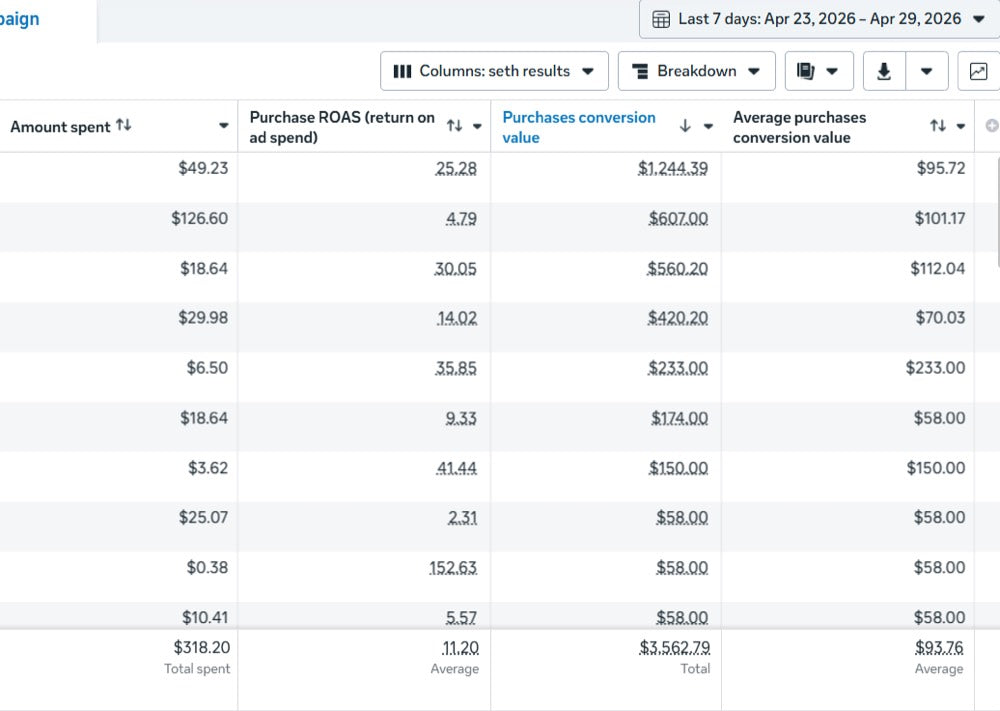
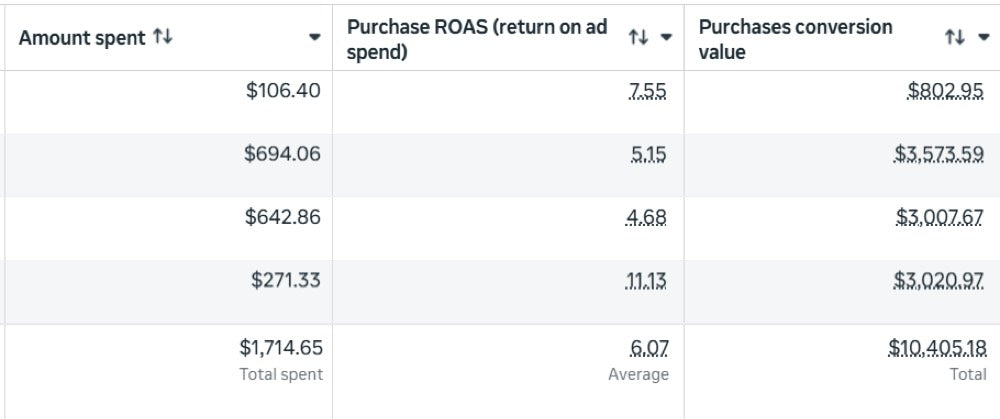
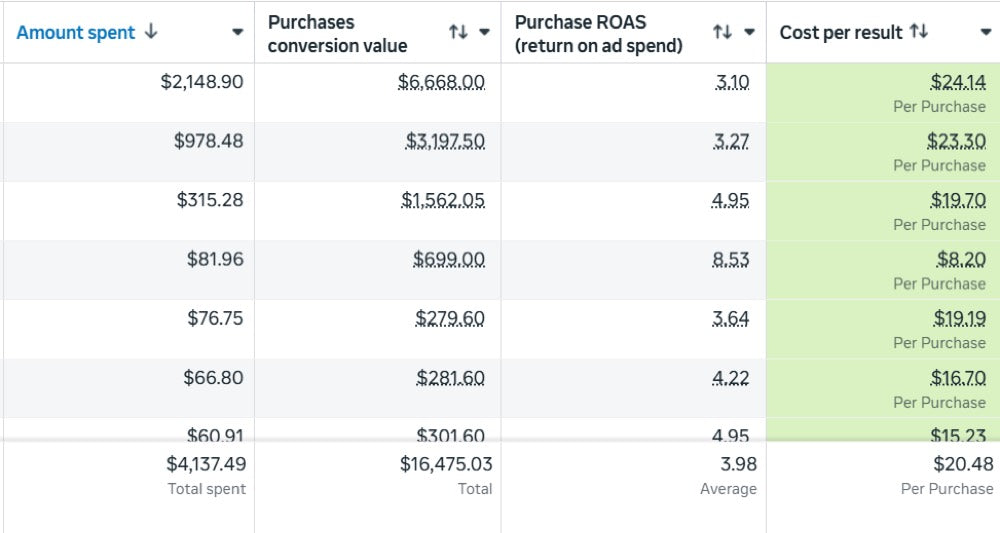
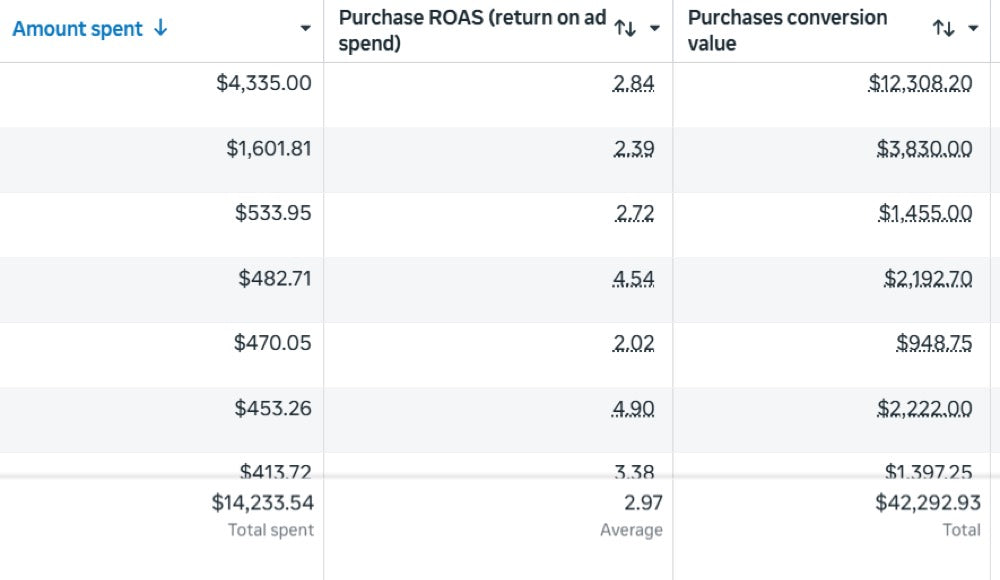
ROAS compresses as spend climbs. 11x at $300 became 3x at $14k. That's not failure, that's what scale looks like everywhere. The question is never "how do I keep 11x." It's "is 3x still comfortably above my breakeven?" At 40%+ margins with a backend catching repeat buyers, 3x at $14k/month spend prints way more profit than 11x at $300. And all four of those sit above the 2.2x fashion median.
When to start
My rule: consistent $5-10k/month organic, 2%+ site conversion, weekly profit tracker. Then ads. Earlier than that, put the budget into product and creators. The brands that "tried ads and lost money" almost all started before their machine could convert the traffic.
Chapter 11
The Backend Prints the Profit
Front end sales get the glory. The backend pays the bills. Across ecommerce, a properly built email + SMS setup drives 20-30% of total revenue (Klaviyo's own benchmarks), and automated flows generate about 40% of email revenue from 5% of sends. Doing $15k/month with no flows? You're leaving $3-4k on the table monthly. At near 100% margin, because you already paid to get these people.
The 5 flows, in order
- Welcome flow off your popup and password page. 3-5 messages: brand story (belief #4!), proof, first-purchase offer. Highest revenue per send you'll ever build.
- Abandoned checkout: 3 touches in 24h. Reminder, objection killer (reviews + shipping answer), nudge. Recovers 5-15% of abandons on its own.
- Browse abandonment: softer, for viewers who never carted.
- Post-purchase: order hype, shipping updates, wear-and-care, then review + UGC ask. This flow is where repeat rate is made.
- Winback: 60-90 days quiet, then new drop energy + incentive.
SMS: the drop weapon
SMS open rates embarrass email. Use it surgically: early access, restock alerts, final hours. Done right it feels like being an insider, which is exactly the belief you've been building. Spam it and you burn the list. 2-4 sends a month, every one worth interrupting someone's day for.
CRO: the compounding 1%
At $20k+/month, small moves are real money: 2.0% to 2.4% conversion is +20% revenue on the same traffic. Test one thing at a time and let each test finish. Unglamorous work. Which is why the brands doing it quietly out-earn the ones making better content.
Chapter 12
Systems That Run Without You
Every founder-powered brand has a ceiling: the founder's calendar. You'll feel it around $15-30k/month. Every sale still touches your hands somewhere, and growth starts costing sleep instead of money. The brands that break 6 figures all make the same shift: from doing the work to owning the machine that does the work.
Case study: Carpe Vestem
Clearest example I've worked with. What makes that brand work isn't one viral moment. It's that the owner has systems that keep producing when he's not working. Content batched and scheduled. Orders flowing through fulfillment untouched. Support running on documented answers. Drops following a playbook instead of a panic. When he steps away, the machine keeps selling. So his time goes into the only two things that compound: product and personal brand.
That's the second lesson from that brand: a genuinely good product plus a genuinely good personal brand can take a brand to the moon. Systems don't replace that. They protect it. They buy the founder the hours to be the face and keep the quality bar high instead of drowning in DMs and tracking numbers.
Build it in this order
- Document before you delegate. For one week, write down every recurring task as you do it. That's your SOP library. Delegating without SOPs creates employees who ask you questions all day.
- Automate the robotic: flows (Chapter 11), order notifications, review requests, support macros, scheduled posting. Software is your cheapest employee and it never calls in sick.
- Delegate the repeatable. In ROI order: fulfillment, then support (a VA with your SOPs), then a content editor. Each hire should free 5-10 of your hours a week.
- Keep the dashboard. Delegate work, never awareness. Weekly profit, support speed, content output, ad numbers. One place, reviewed weekly. Owners who stop watching the numbers get eaten by them.
The goal was never zero hours. It's that your hours only touch things that compound, while the machine handles everything that repeats.
Chapter 13
Profit Is the Only Scoreboard
Revenue screenshots are marketing. Profit is the business. Here's what that discipline looks like on my own dashboard:
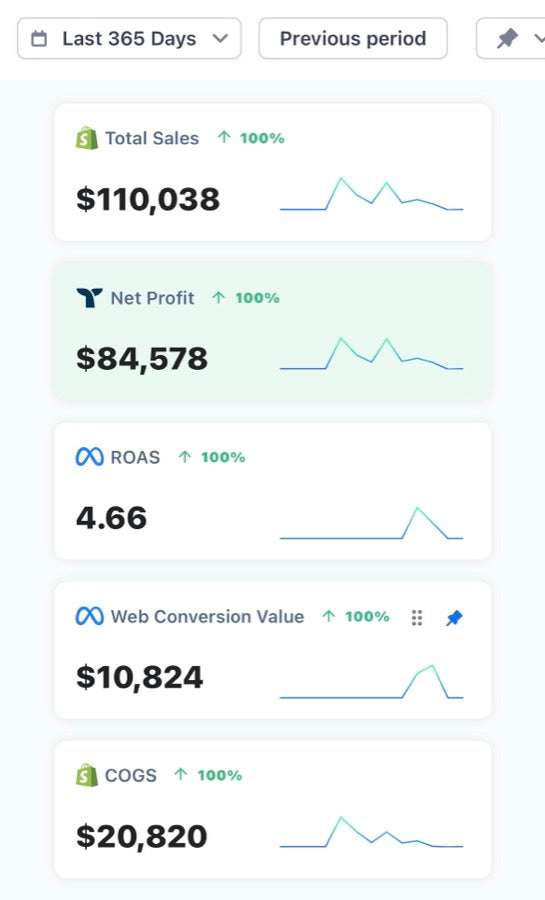
- Weekly, no exceptions: revenue, ad spend, blended CPA, real profit. The moment tracking gets sloppy is the exact moment brands start losing money without noticing. Usually while ads are scaling.
- Per-product margins: your catalog hides winners and losers. A $70 hoodie at 28% margin is stealing shelf space from the one at 55%. Cut or reprice the bottom.
- LTV by cohort: what a customer is worth over 6-12 months decides what you can pay for the next one. Backend raises LTV, higher LTV lets you outbid everyone on ads. That's the loop 7 figure brands are quietly running while everyone else argues about logos.
- Cash rhythm: inventory eats cash before it makes cash. Time production against payouts so a great drop can't cause a cash crisis. That's the most common way GROWING brands die.
- Reinvest on rules decided in advance: say 30% of profit to inventory, 30% to marketing, 20% to team/systems, 20% to you. Calm rules beat emotional decisions after a big month.
Foundation: worldview → sampled premade product → converting site → drop system.
Growth: daily angles → micro creators → AOV stack → 3 systems + profit sheet.
Scale: belief moving → rule-based ads → flows + CRO → SOPs and team → P&L discipline.
Every rung, in order. That's 0 to 6fig. Not fast. Inevitable.
Final Word
Do the Boring Thing Next
What I actually learned inside 6 and 7 figure brands: they're not doing secret things. They're doing obvious things with scary consistency, in the right order, with the numbers tracked. Those founders aren't smarter than you. They just stopped skipping rungs.
So don't close this and go "learn more." Go do the boring next thing at your stage. Order the samples. Fix the product page. Post the fourth angle. Build the welcome flow. Write the SOP.
Store not converting? I'll build it: the same belief-engineered system from Chapter 3, flat $200, ~3 days, you have final say before it's done. Get the custom build or grab Reign ($150) and install the system yourself.
Past $10k/month and ready to scale? I install and run the full machine from Part III for you: Meta ads, email/SMS flows, CRO, backend management, real profit tracking. One system, one operator, receipts like the ones in this book.
Not sure what you need? That's what the free call is for. Bring your store and your numbers, I'll tell you exactly what's leaking and what I'd do next. No pitch unless you ask for one.
See you at 6 figures.
Seth
Founder, SitesBySeth